Couldn't load pickup availability
If there's one tea that captures what I love about long brewing, it's this one. Its the one tea I almost never brew in a teapot.
Instead, I throw it into a thermos, fill it with hot water, and forget about it for an hour or two.
That's when it really comes into its own.
The long brewing brings out a rich, sweet cup with notes of dried fruit and pastry—flavours that simply don't emerge with a quick infusion.
I also love how the tea travels with me. I can make it in the morning, take it on the train to work, and by the time I arrive it's ready. Drink a little, top it up with more hot water, and it'll happily keep going until lunchtime. I love tea as a ceremony and ritual, but I also love tea as something intimately part of our day to day life. This tea is that.
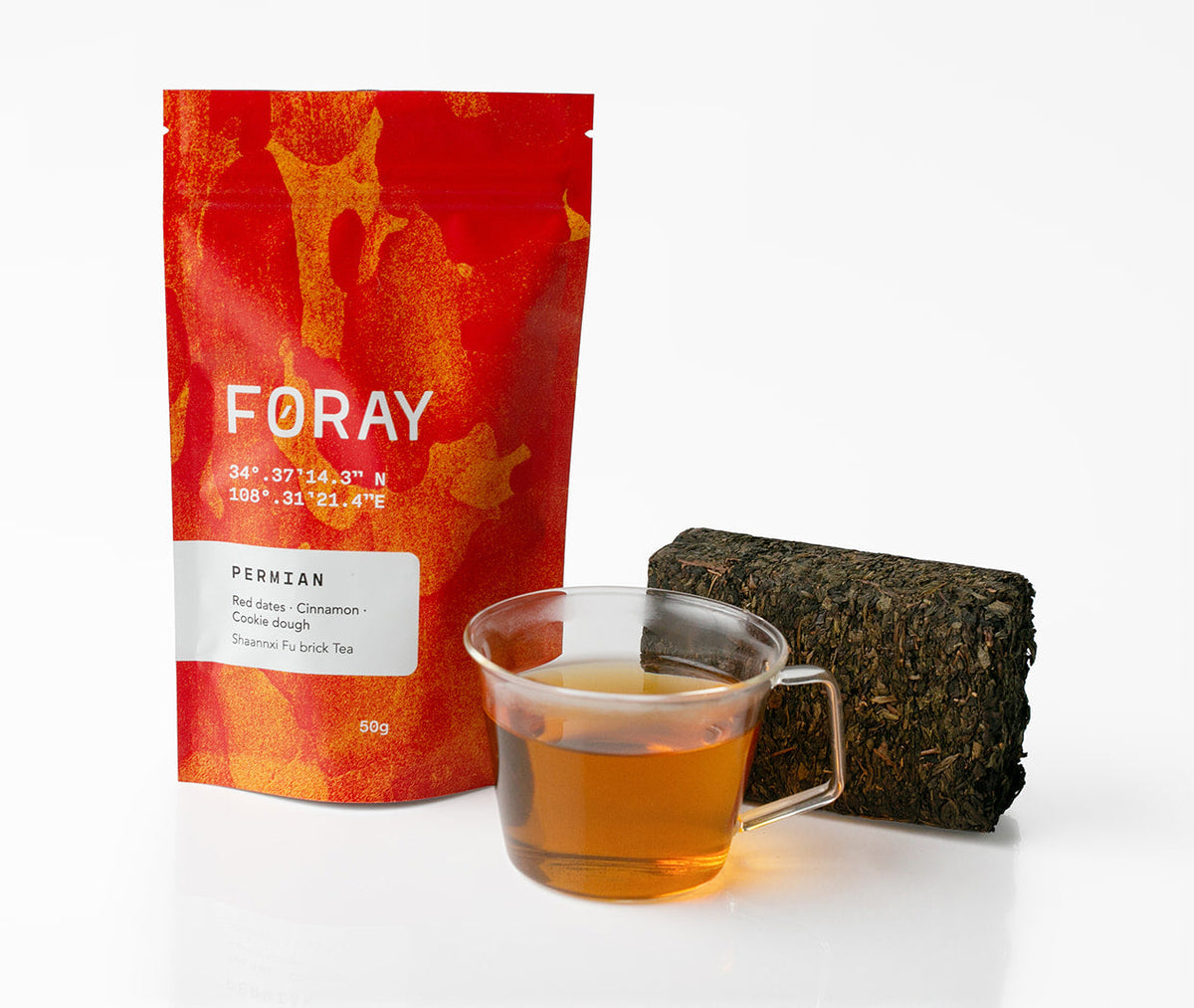
It’s also just a fascinating tea. It’s a probiotic fermented tea and you can actually see the ‘golden flower’ microorganisms on the leaves (the sign of a good fu brick). Traditionally, Fu brick tea has also been enjoyed for its reputed digestive benefits.
All of that is why I wanted to stock Fu brick tea. Despite being one of China's most distinctive styles of tea, it's rarely given the spotlight outside China. I think it deserves one.
Tell me more
Tell me more
Fu brick tea was probably the hardest tea in this collection to source. We tasted around ten different Fu bricks from three different suppliers before finally landing on Mojun Fu Cha's 1368 brick. It immediately stood out for its incredible sweetness( a friend who tasted it recently described it as peach…) and has since become one of our own daily teas.
Fu brick tea (or fucha) belongs to a family of teas known as dark tea (heicha), which are defined by the fermentation they undergo during production. What makes Fu brick tea unique is a beneficial microorganism known as golden flowers (Eurotium cristatum). These microorganisms help transform the tea as it ferments, creating the sweet, mellow character that makes Fu brick so well suited to long brewing.
Traditionally, Fu brick tea has been enjoyed for its reputed digestive benefits. While we're careful not to make health claims, it's interesting that some recent scientific research has begun exploring these traditional uses as well.
Today, Fu brick tea is primarily produced in two regions of China: Shaanxi and Hunan. In general, Shaanxi Fu brick tends to be smoother and sweeter, while Hunan styles are bolder and smokier. After tasting examples from both regions, we chose Mojun Fu Cha from Shaanxi because of its remarkable sweetness.
The tea is part of Mojun's 1368 series, named in honour of the year Fu brick tea is believed to have first been created. Although the tea is produced in Mojun's Shaanxi facilities, the leaves themselves were harvested in Hunan in 2018—a common practice that reflects the long history of tea moving between China's growing and production regions.
Only a bud and the first three leaves are picked for this tea. While there are relatively few stems, some are intentionally included, contributing sweetness to the finished tea. The tea is also grown using ecological farming practices without pesticides or chemical fertilisers.
Brewing guides
Brewing guides
You absolutely must try this brewed in a thermos. It’s still nice brewed in a tea pot, but is almost an entirely different tea.
Thermos
Use boiling water with 2.5g of tea in a 500ml thermos of water steeped for 1 to 2 hours.
If you top it up with more boiling water after drinking a quarter or third of the thermos it will literally last all day without getting bitter or nasty. Finding your own rhythm of toping it up and drinking it through the day is part of the fun of this tea.
If an hour is too long to wait, try 5g for 30 minutes.
Tea pot
Use boiling water with 2g per 150ml of water (the size of a small tea pot) steeped for 3 - 5 minutes, depending on how strong you like it.
Great to try and compare the flavour profile with the thermos brewing method.
Gong fu
Use boiling water with 5-6g per 100ml of water and start with a 15-20 second steeps, adding 5-10 seconds each steep depending on your desired strength. Can be steeped multiple times.
Share